How to Dissolve Your US LLC as a Non-Resident (Without Getting Hit With Penalties)
"Dissolving your US LLC? The state part is easy. The IRS side is where the $25,000 penalties live — and the statute of limitations never expires until you file."

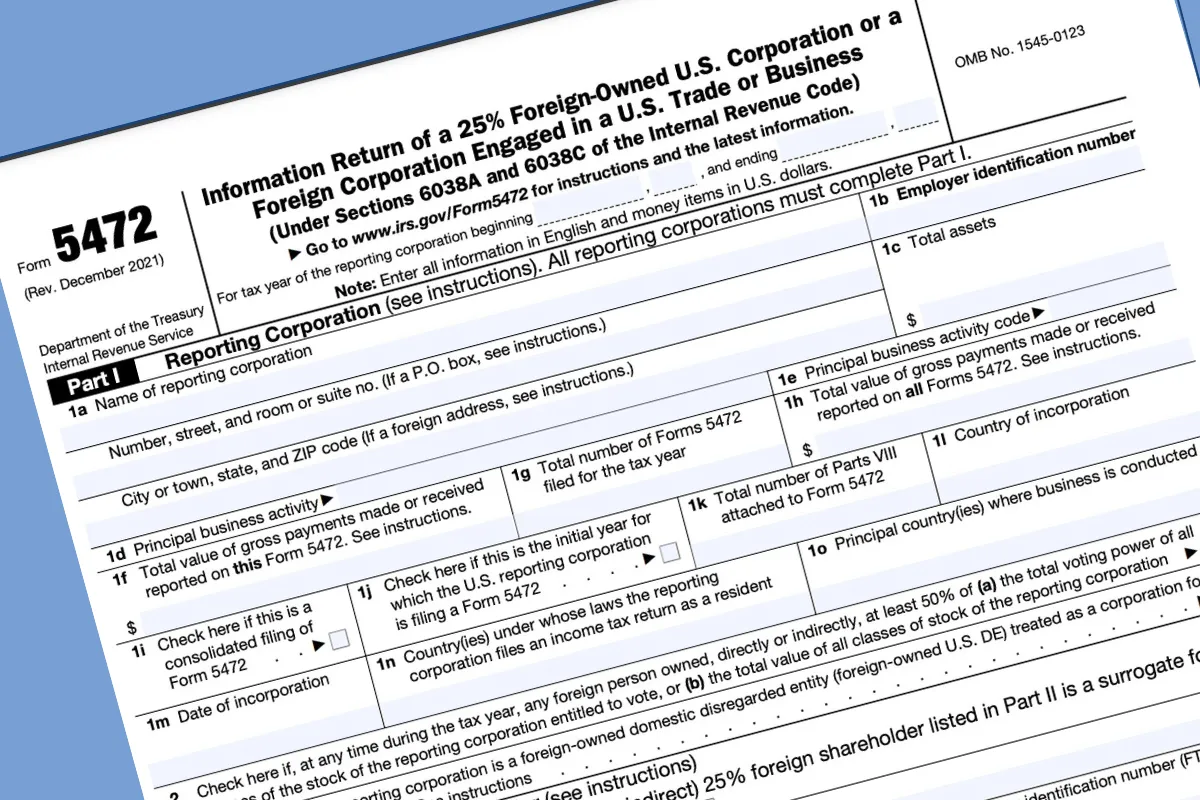
I see this constantly. Someone files Articles of Dissolution with Wyoming, thinks they're done, and two years later gets a CP215 notice — $25,000 penalty for unfiled Form 5472. The IRS doesn't care that Wyoming says your LLC is gone. They care that you never filed.
Here's how to shut it down properly.
The Statute of Limitations Never Expires
Before anything else, understand this: under IRC Section 6501(c)(8), the statute of limitations on Form 5472 doesn't start running until you actually file. If you never file, it stays open forever. There's no "it's been 10 years, they can't touch me."
LLC formed in 2020, never filed Form 5472, dissolved in 2023? The IRS can assess penalties in 2030, 2035, whenever they want. Dissolving doesn't reset the clock. Only filing does. As The Tax Adviser explains, Section 6501(c)(8) keeps the assessment window open for "any tax return, event, or period to which the information return relates."
The Steps — In Order
1. File all missing Form 5472s. Catch up before you dissolve. Every unfiled year is a $25,000 penalty sitting there with no expiration date. Use the Delinquent International Information Return Submission Procedures with a reasonable cause letter attached to each one.
2. Close your bank account. Take all final distributions — each one is reportable on your final Form 5472. Get to zero balance, request closure in writing, get confirmation. If your bank already closed your account on you, still report the final distribution.
3. File Articles of Dissolution with your state.
- Wyoming: Articles of Dissolution — $60 filing fee. Must be in good standing.
- Delaware: Certificate of Cancellation — $200 fee. Must be current on the $300 annual franchise tax.
- New Mexico: Articles of Dissolution with Secretary of State.
Your LLC must be in good standing. States won't process dissolution with unpaid fees.
4. File your final Form 5472. Now that the entity is dissolved, file the final return to close it out with the IRS. Report all transactions from the final year — distributions, registered agent fees, state dissolution fees — in Part V. If any category totals $50,000 or less, use simplified reporting. Mark "Final return" on the pro forma Form 1120. Wet-ink signature required.
5. Cancel your registered agent. They'll keep billing you unless you explicitly cancel.
You do NOT need Form 966. That's for entities taxed as corporations. Your disregarded entity is exempt.
What If Your LLC Was Administratively Dissolved?
This is the worst scenario. You stopped paying the annual fee or franchise tax. The state dissolved your LLC for you. You figured the problem solved itself.
It didn't. The state dissolved your LLC. The IRS didn't. Your EIN is still active. They still expect Form 5472 for every year the LLC existed — and the statute of limitations is open indefinitely on every unfiled year.
Even during "inactive" years, you probably had reportable transactions — the registered agent fee, state fees, any bank activity. Those all trigger Form 5472.
What to do:
- Look up your LLC's status — Wyoming, Delaware, New Mexico
- Don't reinstate just to dissolve — no point paying back fees if you're done with the LLC
- File all missing Form 5472s with reasonable cause letters — your argument: formation company never told you, state dissolved it (not you), you came forward voluntarily once you found out
- File the final Form 5472 — report any transactions in the final year, mark "Final return" on Form 1120. These go in Part V
Timing Trap
Don't withdraw funds after dissolution. Any transaction after the dissolution date creates a new tax year with new filing obligations. Close the bank account, take distributions, THEN dissolve. Wrong order = another year of Form 5472.
Common Mistakes
Dissolving with the state but not the IRS. Penalty notices keep coming for years.
Skipping the final Form 5472. The dissolution is itself a reportable transaction. Missing it is $25,000.
Not checking related parties. Family members or entities with transactions need separate Form 5472s.
Not keeping records. Given the unlimited statute of limitations, keep everything indefinitely — dissolution docs, filed Form 5472s, bank statements.
File It and Close It
MyFreeTaxAmerica.com handles final-year Form 5472 filings the same as regular ones. The software generates the pro forma Form 1120 marked "Final return" and flags errors before you submit. If you need more time, you can still file an extension even in the final year. A simple Excel spreadsheet can reconstruct transactions from bank statements if you're behind. Check our FAQ for the basics.
Our Premium Package ($149) includes professional review, reasonable cause letter, and IRS e-fax submission — exactly what you need if you're filing late for multiple years.
Don't let a dissolved LLC haunt you forever. The statute of limitations doesn't expire until you file. So file.
Resources:
- IRS — Closing a Business
- IRC Section 6501 — Statute of Limitations
- Wyoming Articles of Dissolution (PDF)
- Delaware Dissolutions and Cancellations
General information, not tax or legal advice. Dissolution requirements vary by state. Consult a qualified tax professional about your situation.